The link between cat litter and cat health is often stronger than expected. Cat litter affects the cat's health in three ways: respiratory (dust), contact (paw and skin), behaviour (refusing to use the container). The most important consequence of these is the third one — the cat that does not use the bowl retains its urine, and this paves the way for urinary tract problems. Sand that is good for health: dust-free, perfume-free, comfortable on the paw and accepted by the cat. It is sand. The litter box is also a free health monitor: changes in the amount of urine, frequency and stool consistency are the earliest signs of diseases.
Important: This article is for general information purposes and does not replace a veterinary examination. If you notice any changes in your cat's behavior or toilet habits, contact your veterinarian without delay — inability to urinate is an emergency, especially in male cats.
Cat litter is often thought of as a comfort product: it shouldn't smell, it shouldn't scatter, and it should be economical. However, sand is the only surface that the cat comes into contact with several times a day, stands on it and puts its nose close to it. This guide covers all aspects of the connection between sand and health.
In what ways does sand affect health?
There is a fourth title and it is often overlooked: the litter box, where you can monitor your cat's health. is the most organized data source. A person who paddles twice a day knows his cat's urinary and fecal patterns better than a professional tracker.
Breathing: dust issue
Cats dig in the litter box, cover it, and all the while their noses are a few inches into the sand. Airborne dust is directly inhaled. A healthy adult cat usually tolerates this without problems; however In cats with asthma, kittens, elderly cats or those with chronic respiratory problems the table changes.
- Crystalline silica powder — found in clay and silica-based sands; It is reasonable to reduce unnecessary exposure.
- Perfume — Strongly scented litter can irritate the respiratory tract and drive the cat away from the bowl.
- Mold spores — may occur in moistened vegetative sand. See mold.
- Organic powder — the powder of vegetable sands does not contain crystalline silica, but is still powder; A well-sifted product is important.
Lower respiratory tract diseases in cats are a known and treatable condition; Reducing indoor triggers is part of the treatment. Detail: cat litter dust And choosing hypoallergenic litter.
Contact: paw, skin and licking
The cat licks its paw after getting out of the container. This is the second line of contact with sand:
- Paw padsSharp cornered or very hard grains may irritate especially sensitive paws. See paw irritation.
- Between quotesFine dust accumulates here and is licked off.
- Abdomen and leg feathersIn long-haired cats, grains of sand stick to the fur.
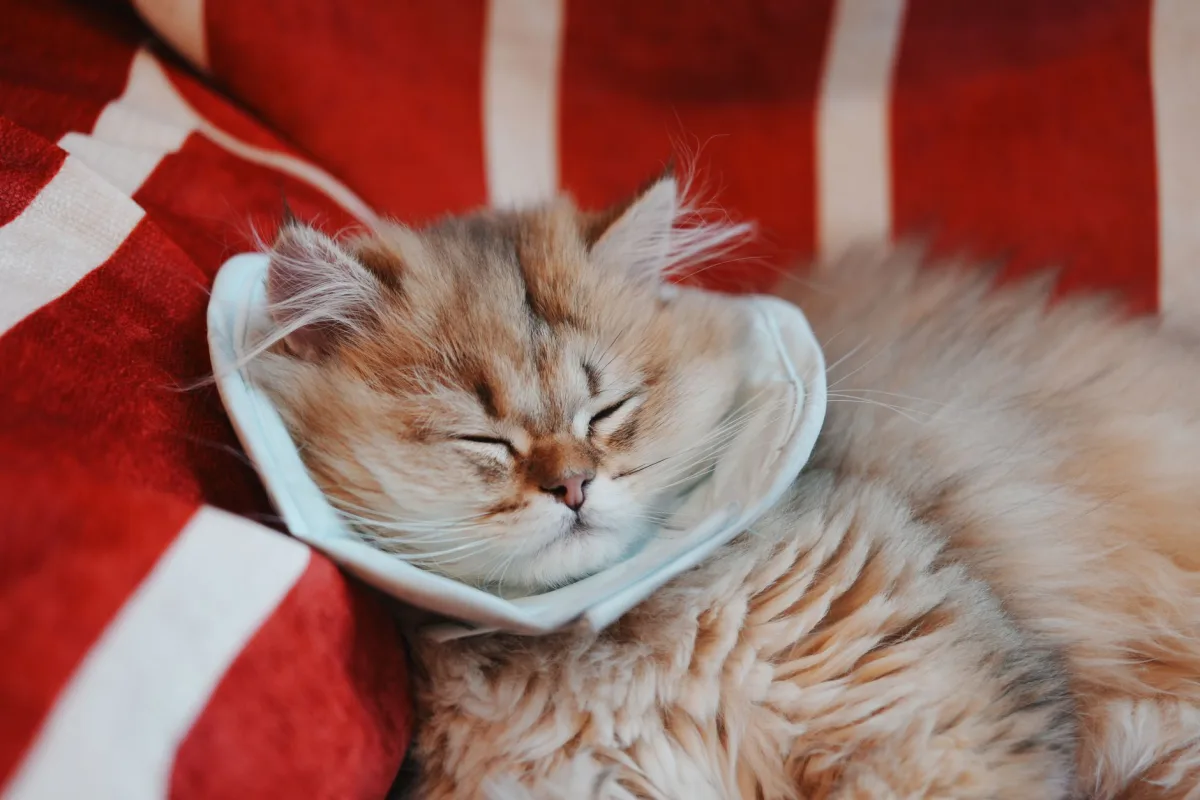
- Surgical stitchIf there is an open wound or fresh stitches, sand adhesion creates a risk of infection. See litter after surgery.
- SwallowingA small amount of sand is removed by licking; Regular and significant sand eating is a separate problem (pica).
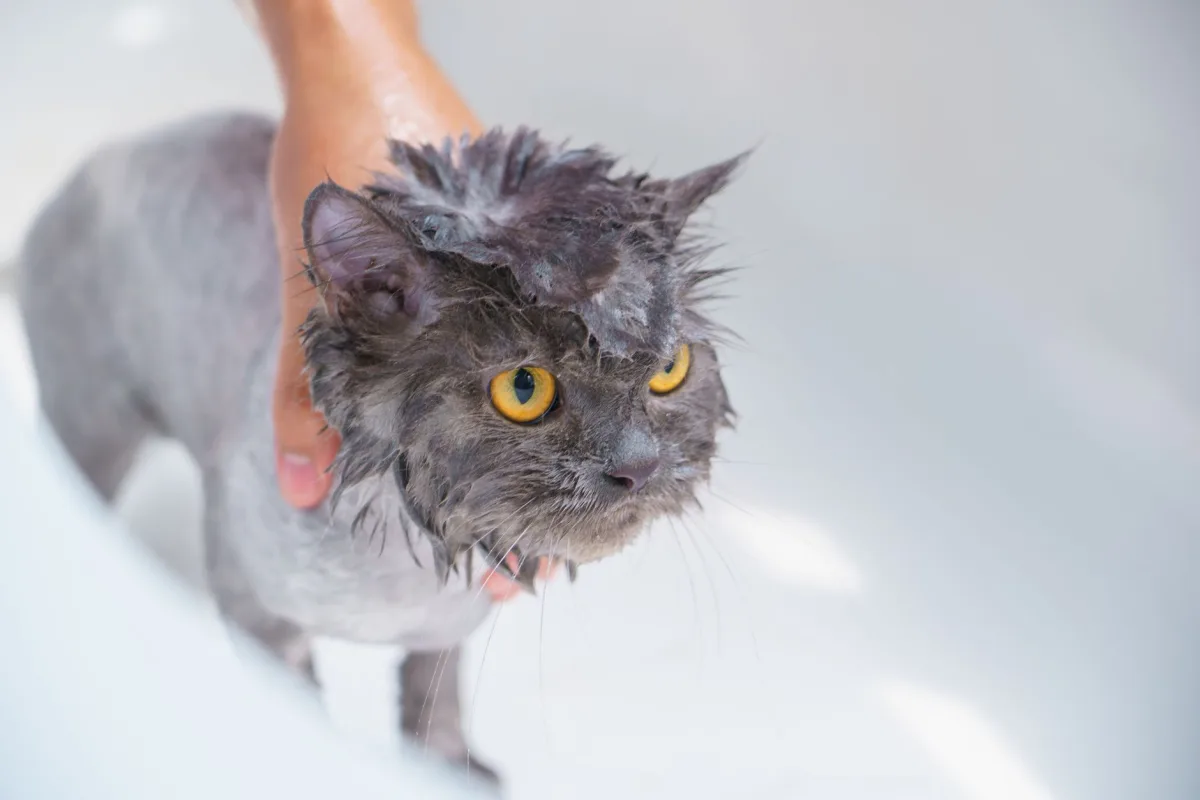
The measure is: If your cat shakes its paw exaggeratedly after getting out of the litter box, licks it for a long time, or enters the litter box reluctantly, this is a sign that the litter is bothering it. The cat cannot tell you this in any other way.
Behavior: cost of rejecting the container
This is the strongest connection between sand and health. Cats can hold their urine to avoid getting into a container they don't like. Urine remaining in the bladder for a long time creates a favorable ground for urinary tract problems; This can have serious consequences, especially in male cats.
Reasons why the cat may reject the bowl: perfumed or hard litter, dirty bowl, wrong position, too small bowl, lack of air in the closed bowl, insufficient number of bowls and of course painful urination experience. Detailed list: won't use the litter box And He wonders about his toilet..
Critical distinction: Don't interpret a cat who stops using the bowl as "stubborn" or "angry." Very often behind this behavior pain There is — the cat associates pain with the container and runs away from the container. Vet first, behavior second.
The litter box is a health monitor
Each scooping is a report on your cat's health. Note the following:
| Observation | Possible meaning | What to do |
|---|---|---|
| The number of lumps increased | There may be increased water consumption or urine production | Talk to the vet |
| The lumps have become very small | Frequent but little urine | Urgent evaluation |
| No urine | There may be clogging | Emergency vet |
| Trace of blood in the sand | Urinary tract or bowel problem | Same day vet |
| Stools are very hard or absent | Constipation | Talk to the vet |
| Watery stool | Diarrhea, parasites, nutrition | Talk to the vet |
| The smell suddenly changed | Metabolic or digestive change | Follow up, vet if it persists. |
| Urinating outside the litter box | Pain, stress or heart problem | Veterinary check first |
Clumping sand makes this tracking easier: it makes the amount of urine visible to the eye. It is almost impossible to monitor urine volume in non-clumping litter. for method urine monitoring See our article.
Private groups
- Kittens. The tendency to take it in the mouth is high; Care should be taken in clumping sands. See which litter for kittens.
- Senior cats. He may not be able to enter the high-sided container due to joint pain. See litter for older cats.
- Postoperative. Dust and grain can stick to the seam; Paper-based sand is temporarily recommended.
- Asthmatic cats. Dust-free, perfume-free sand is a must.
- Those with a history of urinary tract problems. It is critical that the container is clean and accessible at all times. See urinary tract health.
- Multi-cat homes. Competition for resources can lead to urinary retention. See multi-cat home.
Health-oriented sand selection
Preferred for health
- Dust-free
- Unscented
- Grain structure that is comfortable for the paw
- Clumping (ease of tracking)
- The cat accepts
Those who may have health problems
- Intensely perfumed sands
- Very dusty fine clay sands
- Hard grains with sharp corners
- Damp, moldy sand
- Chemicals added to the sand later
Cat litter from olive pits In this list, it meets the dust-free, perfume-free and clumping titles together; With its active carbon structure, it also controls odor without adding chemicals. Still the best sand, your cat uses sand — any product that is not accepted is not healthy.
A health-oriented litter choice translates into three concrete things in everyday life: the cat enters the container without hesitation, you inhale less dust while scooping, and you can visually see the change in the amount of urine. Cat litter from olive pits It has a structure that supports all three at the same time — but no matter which sand you choose, the decisive factor is the routine you build on it.
Perfume-free, dust-free, clumping
8 liter olive pit cat litter meets all three health-focused criteria; for sensitive homes pine pellets is a second dust-free option.
single 8 L natural cat litter 8 L x 2 pack of natural cat litter All cat litter types
Daily routine that protects health
What remains after sand selection and is actually more decisive is routine. The following list collects daily habits that make a difference to your health:
- Scoop twice a dayA clean container allows the cat to enter without hesitation — the simplest intervention to prevent urinary retention.
- Maintain the litter depth5-7cm. The cat should be able to dig comfortably and not see the bottom.
- Keep the number of containers correctNumber of cats + 1, distributed in different rooms.
- Wash the bowl once a monthHot water and unscented soap; Don't forget the scoop.
- Change the container in timeScratched plastic retains odor and cannot be cleaned.
- Support water consumptionMultiple bowls, twice daily refreshment, location away from litter box.
- Make changes slowlySpread the litter, container or location change over several days.
- Every scooping is a checkThe number of lumps, the consistency of the stool, the trace of blood, the smell — a three-second look is enough.
Total for one year: Three minutes of scooping twice a day adds up to about 36 hours a year. The reward of this time is not just a clean house; It is a regular series of observations that monitor your cat's health. No product can replace this routine.
Emergency signs
Go to the vet without delay:
• The cat frequently enters the litter box can't urinate at all (especially male cats — this is a life emergency)
• If he meows loudly and has difficulty urinating
• If you see blood in the sand
• If there is no urine for more than 24 hours
• If vomiting, weakness and loss of appetite accompany the picture
• If he/she reacts to touching his/her abdomen
Cornell Feline Health Center And International Cat Care, includes the inability to urinate among the situations that require urgent intervention. To reach the nearest veterinarian in Turkey Turkish Veterinary Association sources may be guiding.
Frequently asked questions
How does cat litter affect a cat's health?
Three ways: inhaled dust, paw and skin contact, container use behavior. The most critical one is the third one — a cat that does not enter the container it does not like retains its urine, and this paves the way for urinary tract problems.
Which cat litter is best for health?
A dust-free, perfume-free sand that is easy on the paw and clumps. But the best litter is the litter your cat actually uses; An unacceptable product is not healthy, no matter how good it is.
Can cats catch diseases from litter?
Sand itself does not cause disease. But dusty and perfumed litter can irritate the respiratory tract, moldy litter creates exposure to spores, and container rejection can lead to urinary retention.
How can I monitor my cat's health from the litter box?
Look for changes in the number and size of lumps, stool consistency, traces of blood, and odor during daily scooping. Clumping sand makes the amount of urine visible.
What should I do if my cat won't go into the litter box?
Get a vet check first; There is often pain behind this behavior. If there are no medical problems, review litter type, container cleanliness, location, and number of containers.
Is perfumed cat litter harmful?
Strong perfume can irritate the respiratory tract, leading many cats to reject the bowl. In terms of health, unscented sand is a safer choice.
Related articles
Tags for this post

The team that produces sand in our production facility in Ayvalık turns the most frequently asked questions in the field into a guide. Health-related sections are general information; It is not a substitute for a veterinary examination.