Cats naturally fine-grained, soft soils prefers — this comes from the instinct to bury in sand and loose soil in nature. Very fine grains produce more dust and stick to the paw; Very large grains create discomfort under the paw and make the cat's covering behavior difficult. The balanced gap is usually around 1-3 mm. Grain size also directly determines the agglomeration power, powder ratio and scattering amount.
Grain size is a critical variable that is almost never written on cat litter packaging, but determines whether your cat will use the container or not. In this article, we explain how it works and how to evaluate it.
Why is grain size important?
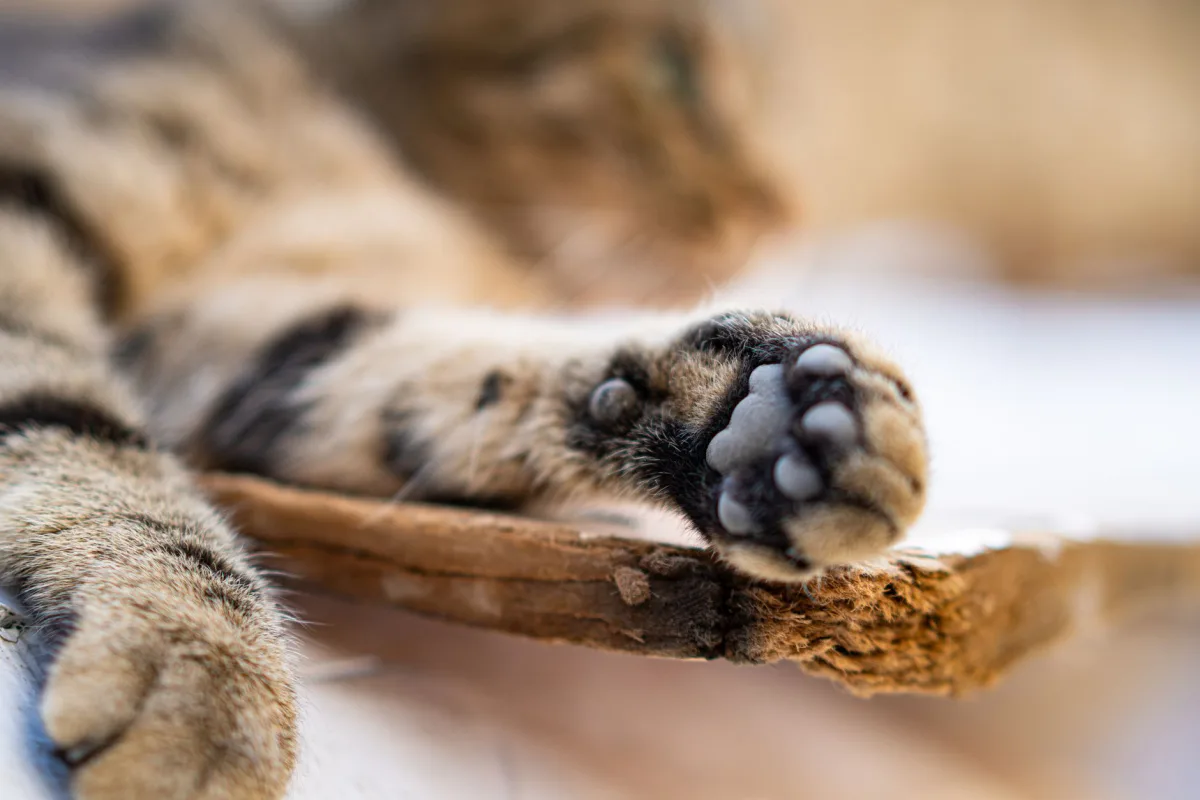
The cat's relationship with the litter box starts with its paw. As soon as he steps into the rough, he evaluates the ground: is it soft, can it be scraped, does it sink into the paw? This evaluation happens within seconds and largely determines whether or not to use the container.
The ancestor of cats is the desert cat and its natural toilet floor fine sandStop. House cats have largely retained this preference. Therefore, the more sand resembles natural sand, the higher the acceptance rate.
What does it affect?
| Feature | Fine grain | Coarse |
|---|---|---|
| Cat acceptance | High | Variable |
| Dust level | High | Low |
| Clumping | Strong (more contact surface) | Weak |
| Sticking to paw | More | Low |
| Scattering | Excess (carried by paw) | It jumps little but far |
| Ease of covering | Easy | Difficult |
| Shedding from the scoop | Easy | Difficult (relative to rowing hole) |
As you can see, the advantages of fine and coarse grains are opposite to each other. A good product to strike that balance elimination It makes: very fine fraction (powder) is separated, very coarse pieces are ground again. How this step works in production The production process is in our article we told.
Grain size by species
| Litter type | Typical size | Feel under paws |
|---|---|---|
| Bentonite | Very thin (0.5-2 mm) | Soft |
| Olive pit | Fine-medium (1-3 mm) | Soft-medium |
| Corn | Thin-medium | Soft |
| Wheat | Thin-medium | Soft |
| Tofu | Pellet (2-3mm) | Middle |
| Crystal | Large (3-5 mm) | Hard, sharp |
| Pine pellets | Very large (6-10 mm) | Hard |
| Paper | Medium pellet/granule | Very soft |
This table answers the question “why doesn't my cat use crystal or pine pellet litter?” It explains most of the answer to the question. See It doesn't go into the litter box: 10 reasons.
What size do cats prefer?
The general trend is towards fine grain, but this is not an absolute rule — individual cats' preferences vary. International Cat Carestates that giving cats a choice is the most reliable way to understand their preferences.
Preference test: Place two containers side by side, fill one with your existing sand and the other with new sand. Within a few days you will see which one your cat uses more. This is a much more reliable method than guessing. In multi-cat households, you already have an extra bowl due to the N+1 rule — see. N+1 rule.
Special cases
- Kittens: It prefers fine-grained, soft sands. Large pellets may cause container rejection. See which litter for kittens.
- Older cats: It becomes difficult to stand on large and hard grains due to joint problems. See litter for older cats.
- Paw wound / post-surgery: The softest option is required. See paw irritation, litter after surgery.
- Long-haired cats: Very fine grains stick to the feathers and are carried into the house; Medium size grain is more practical. See scatter solutions.
- Respiratory sensitivity: Very fine grains mean more dust. See cat litter dust.
Balanced grain size
Cat litter from olive pits It is sieved and brought to a homogeneous granule distribution: fine enough to make dust, but not so coarse that it would disturb the paw.
8 liters of olive pit cat litter Quadruple 8 L olive pit cat litter All cat litter packages
Frequently asked questions
Do cats like fine grain cat litter?
The general trend is for fine grain, as cats naturally bury in sand and loose soil. However, very fine grains produce more dust; balanced spacing is usually around 1-3mm.
Does grain size affect agglomeration?
Yes. Fine grains generally clump more strongly because they offer more contact surface. Very large grains bind poorly or do not clump at all.
Why doesn't my cat use coarse grained litter?
Large grains create discomfort under the paw and make it difficult for the cat to cover. This is a common acceptance problem with coarse sands such as crystal and pine pellets.
Does grain size affect scattering?
Yes, but in two ways: fine grains stick to the paw and are carried home, while larger grains jump farther when scratching. Medium grain usually gives the most balanced results.
How can I tell if the grain size is not written on the packaging?
Take a small packet and pour it into your palm to evaluate it. You can also place two bowls side by side and give your cat a choice and directly observe its preference.
Related articles
Tags for this post

The team that produces sand in our production facility in Ayvalık turns the most frequently asked questions in the field into a guide. Health-related sections are general information; It is not a substitute for a veterinary examination.