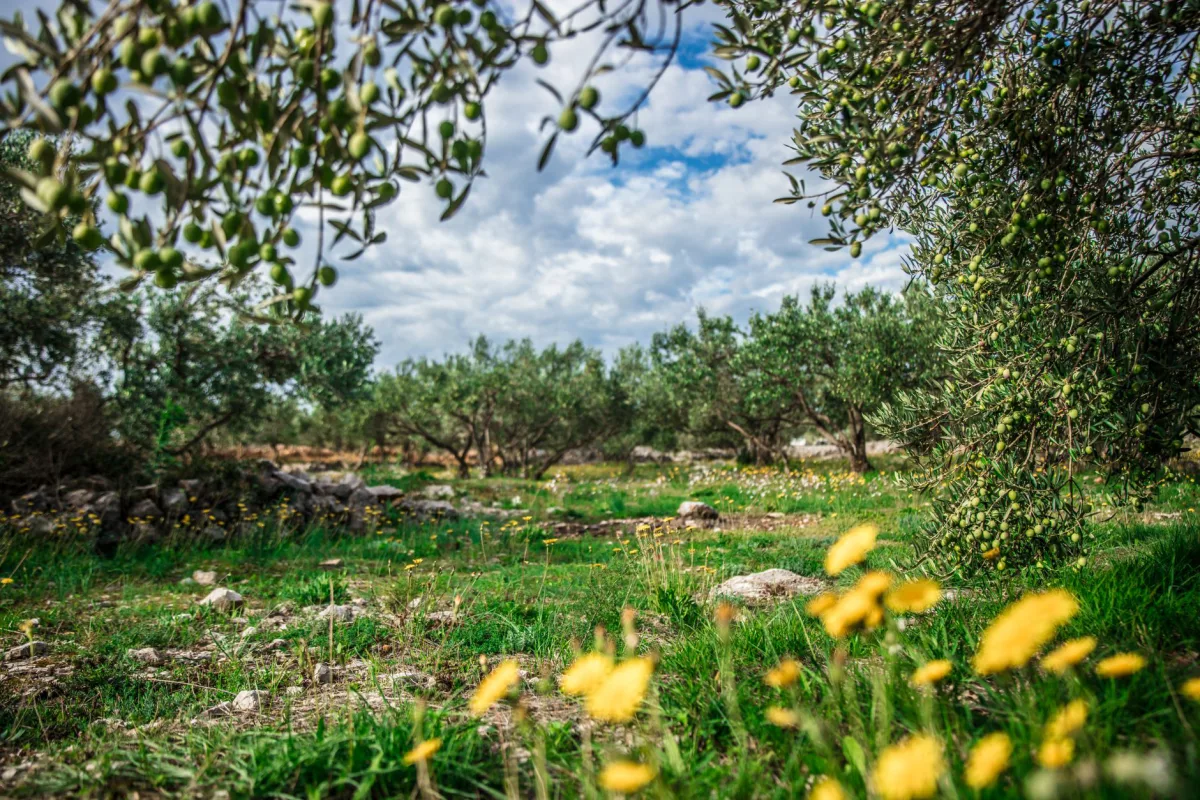
HK Cat Litter, a product produced in Ayvalık cat litter from olive pits is the brand. Ayvalık is one of the most well-established olive growing regions of Turkey and has tons of olive oil produced every harvest season. olive pomace (olive pulp) remains. The hard core in this by-product is separated and processed into cat litter. In other words, the product is not made from a raw material brought from afar, from the region's own agricultural cycle is born.
Knowing where a product comes from is half the battle to understanding what it is. In this article, we explain how Ayvalık olive groves turned into a cat litter and why this locality is important.
Ayvalık and olives
Ayvalık is a district of Balıkesir on the Aegean coast and one of the first places that come to mind when it comes to olive cultivation in Turkey. The region's climate, soil and centuries-old production tradition have made olive growing here not just an agricultural activity but a culture.
Türkiye, International Olive Oil Council According to data, it is one of the world's leading olive and olive oil producers. It is one of the civil organizations working on the protection and sustainable production of olives in the country. Olive Friendly Association.
Pomace: by-product waiting to be evaluated
Olive oil production is based on a simple logic: olives are crushed and the oil is separated. But the solid part that remains — olive pomace — is no small amount. Every harvest season, tons of pomace come out of the factories.
Pomace consists of two components: the pulp of the fleshy part of the olive and hard inner core. Traditionally, pomace was used as fuel or as an animal feed additive. However, its core fraction has a much more valuable use thanks to its lignocellulosic structure: because it is naturally porous. absorbs liquid.
This is exactly the feature sought for cat litter. Detail: How does absorbency work?.
How was the idea born?
The problem itself was already there: on the one hand, an agricultural byproduct that needed to be disposed of, and on the other, a heavy and dusty standard of cat litter mined from the ground.
Bentonite—the majority of cat litter on the market—is a clay obtained by open-pit mining. It is a non-renewable resource, heavy and does not decompose in nature after use. This costs environmental cost of bentonite mining We discussed it in our article.
On the other hand, the olive pit was a material that had already emerged. Turning it into cat litter did not consume any new resources, but utilized existing ones. This approach circular economy called — see recycling of olive waste.
What does the process look like? The pomace is sieved, the seed is separated, the oil residue is removed, dried, ground and with activated carbon is enriched. All physical processes; No chemical flocculants, synthetic perfumes or colorants are used. Step by step: production process.
5 advantages of local production
- Short supply chainClose to raw material production facility. This reduces transportation emissions and costs. See carbon footprint.
- Monitoring the quality of raw materialsKnowing where the pomace comes from makes the processing quality controllable.
- Contribution to the regional economyAdding value to the by-product makes the material available to the producer economical.
- Seasonal planningBy knowing the harvest calendar, stock and production can be planned.
- Reduction of wasteSome of the material that needs to be disposed of turns into a product.
What products do we produce today?
We have two main product lines — both natural and biodegradable, but with different uses:
| Product | Feature | Packages |
|---|---|---|
| Olive pit + activated carbon | Clumps, dust-free, retains odor | 8L, 8Lx2, 8Lx3, 8Lx4, 7,5L |
| Pine pellets | Ultra low dust, natural pine scent | 5kg, 5kgx2, 5kgx3, 5kgx4 |
To choose between the two to our comparison article you can look. For brand and contact information about us And contact we have pages; For those wondering To our FAQ page You can take a look.
From Ayvalık to your home
100% natural and biodegradable cat litter produced from the by-product of olive cultivation.
single 8 L natural cat litter natural pine pellet cat litter All cat litter types
Frequently asked questions
Where is HK Cat Litter produced?
It is produced in the Ayvalık district of Balıkesir. The raw material is provided by the olive pits in the pomace obtained from olive oil production in the region.
What is pomace?
It is the solid part remaining after the olives are crushed and the oil is separated in olive oil production. It contains both the pulp of the fruit and the hard inner core; Only the seed fraction is used for cat litter.
Why is olive pit cat litter considered environmentally friendly?
Because it does not consume any new natural resources; It evaluates an agricultural by-product that has already emerged and needs to be disposed of. It also decomposes in nature after use.
Are chemicals used in production?
No. The process consists of physical operations such as separation, washing, drying, grinding and sieving; Only activated carbon of vegetable origin is used as an additive.
Are raw materials available in all seasons?
Olive harvest is seasonal, so pomace appears seasonally. Continuity in production is ensured by storing dried beans under appropriate conditions.
Related articles
Tags for this post

The team that produces sand in our production facility in Ayvalık turns the most frequently asked questions in the field into a guide. Health-related sections are general information; It is not a substitute for a veterinary examination.