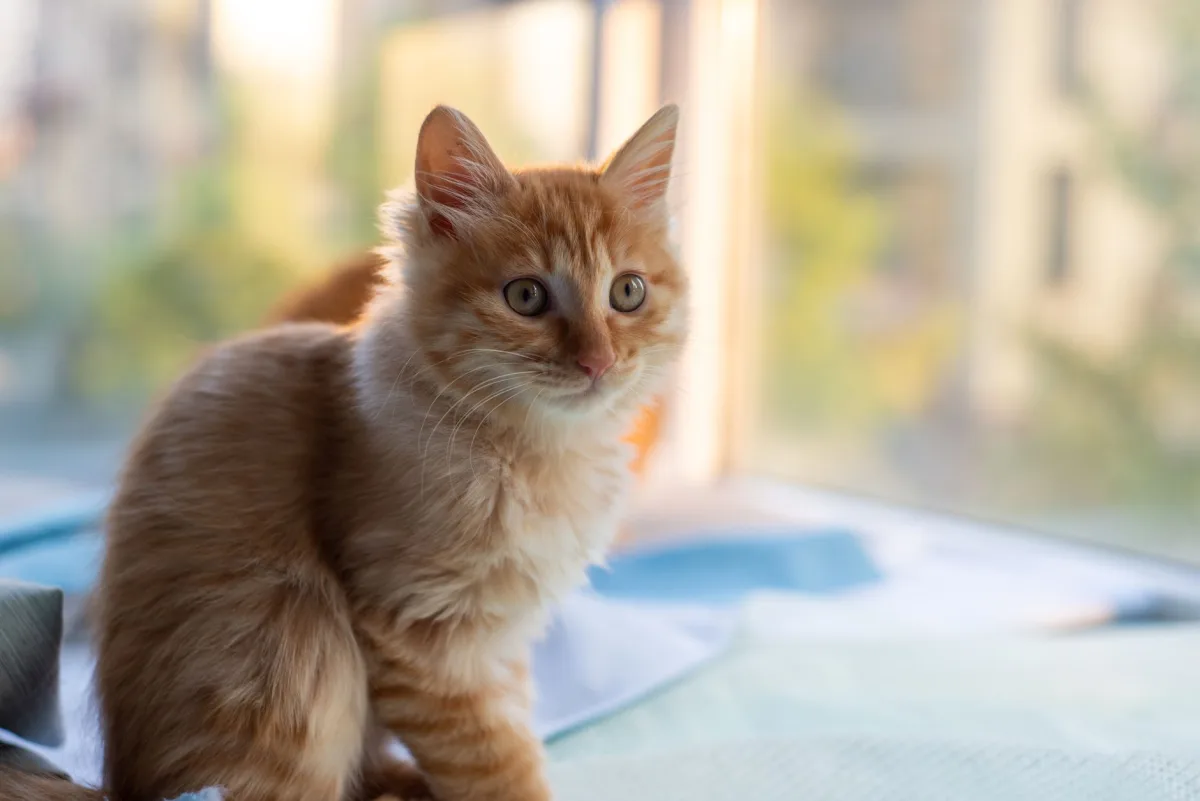
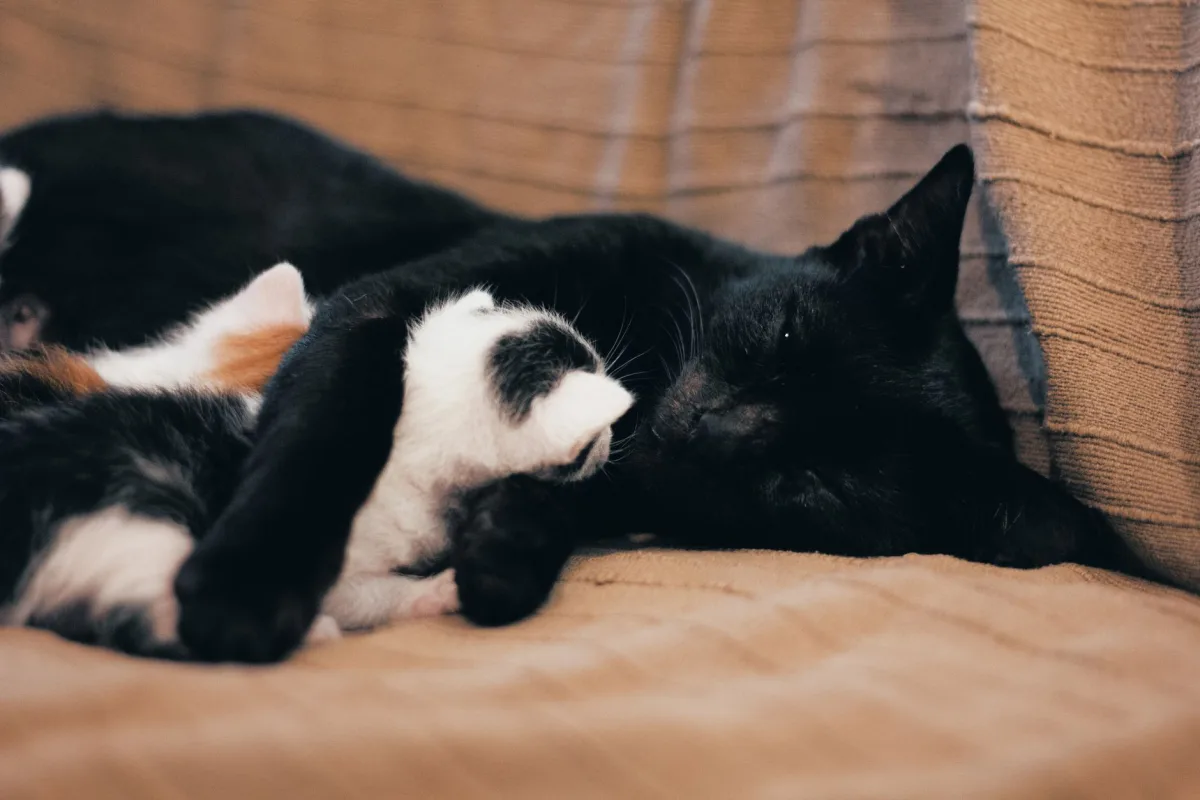
Mother cat and kittens can share the same sand — sharing is even beneficial for learning: kittens reinforce toilet behavior by watching their mothers. However The sand type should be chosen according to the kitten.During this period, the mother's bowl should contain non-clumping, dust-free and perfume-free sand. The container is divided into two: a normal size container for the mother and a separate container with low sides for the babies. In the first weeks after birth, the frequency of cleaning should be increased and the containers should be kept close to the room where the mother and the kittens are located.
Notes: The health of newly born mother cats and kittens should be monitored by a veterinarian. During the postpartum period, symptoms such as loss of appetite, fever or discharge in the mother cat should be evaluated without delay.
How do kittens learn from their mother?
In the first three weeks of life, the mother cat warns the kittens about their toilet needs by licking them; kittens can't do it on their own. Starting from about the third week, they begin to become independent and head towards the container, imitating the mother.
That's why the cubs who stay with the mother long enough are sent to their new homes. educated income. In kittens separated from their mothers early, the process remains with the owner; see toilet training kitten.
When adopting: Giving the new owner a handful of used (not dirty, odorless) litter along with the kitten makes it easier for the kitten to recognize the new bowl. The familiar smell reduces accidents in the first days.
Common sand selection
Selection when mother and pups use the same container according to the most sensitive is done — that is, according to the offspring:
| Feature | In this period | Why |
|---|---|---|
| Clumping | Avoid | Risk of kittens being ingested |
| Dust | Low | Developing respiratory tract |
| Perfume | Avoid | Odor sensitivity, acceptance |
| Unit | Soft or medium | Little paws |
| Depth | 3-4cm | Baby don't let it sink |
| Chemical additive | Avoid | Mother licks her baby |
The last line is often skipped, but it is important: the mother cat constantly licks her kittens, and the residue on her paw is passed on to the kittens this way. During this period, litter that does not contain chemical additives and perfumes is the right choice not only for the kitten but also for the mother. For the entire sand selection which litter for kittens See our article.
Container layout
- Normal cap for motherA large, open container suitable for height.
- Low bowl for kittens5-8cm edge; Not next to the mother's container, but slightly away from it.
- Keep it close to homeThe mother does not want to be away from her babies.
- Do not use coverThe mother should be able to see her babies.
- Increase the numberAs the kittens become independent, increase the number of containers.
- Non-slip floorImportant for little paws.
- Make transportation easierKittens should be able to go from the nest to the container on their own.
How many containers are needed? Once the kittens are weaned, the house temporarily becomes a "multi-cat house". The rule still applies: number of individuals + 1. This may seem like a lot for a household with five offspring; In practice, one low container for the mother and two or three for the brood group will suffice in most cases — but distribute the containers in different spots.
Hygiene and cleaning
During this period, cleaning frequency should be higher than normal. Reasons:
- Kittens are immune sensitive
- Container use is intense; multiple individuals use the same container
- Diarrhea is common in kittens and spreads quickly
- Mother cat does not want to enter the dirty bowl
- Sand scattering increases
- Scoop two to three times a dayMore frequent during this period.
- Do full changes more oftenSand that does not clump becomes saturated more quickly.
- Wash containers weeklyHot water and unscented soap. See disinfection.
- Wash hands after each cleaningDefinitely before contacting the kittens.
- Implement the parasite programVeterinary calendar for mother and kittens.
- In case of diarrhea, see a veterinarian immediatelyDehydration occurs rapidly in kittens. See diarrhea.
International Cat Care, highlights the role of hygiene and parasite control during the kitten period in preventing future health and behavioral problems. For the entire hygiene side cat litter and bacteria You can look at our article.
After the babies leave
After the kittens are adopted, the mother cat's routine returns to normal. At this stage:
- You can remove the low fry containers and return to the normal container
- You can gradually switch to clumping sand.
- Rearrange the number of containers (number of cats + 1)
- Discuss spay/neuter plan with your veterinarian
In this transition cat litter from olive pits It is a reasonable option: it does not contain perfume and chemical additives, its clumping performance makes cleaning easier and makes urine monitoring possible. Spread the migration over 5-7 days — see switching brands.
The litter decision taken during this period also shapes the offspring's future preferences; They will look for the texture they got used to in their new homes in the first months. It will be transferred to the mother after adoption. cat litter from olive pitsThe pattern of the whole family remains consistent when it is the same crop that the offspring will pass on after a few months.
After the babies leave
While the mother cat's routine returns to normal 100% natural, perfume-free olive pit cat litter You can pass.
8 L olive pit cat litter double pack olive pit cat litter See all cat litters
Frequently asked questions
Can mother cat and kittens use the same litter?
Yes, and this is useful; Kittens learn toilet behavior by watching their mothers. However, the type of litter should be chosen according to the kitten: it should be non-clumping, dust-free and perfume-free.
At what age do kittens start using the litter box?
They usually begin to show interest in the crate at 3-4 weeks of age and use it regularly at 4-6 weeks of age. In the first three weeks, the mother cat warns about the need to go to the toilet.
How many containers are needed for the mother and the babies?
In most cases, one normal-sized container for the mother and two or three low-sided containers for the babies is sufficient. Distribute the containers in different spots.
How often should the sand be cleaned during this period?
Scooping two to three times a day and complete changes more frequently than usual. Kittens are immune sensitive and the container is used extensively.
What should I give to the kitten when adopting?
A handful of familiar litter and knowledge of the type of litter it uses will make it easier for the kitten to adopt the container in its new home.
Related articles
Tags for this post

The team that produces sand in our production facility in Ayvalık turns the most frequently asked questions in the field into a guide. Health-related sections are general information; It is not a substitute for a veterinary examination.