Kittens are usually at 3-4 weeks old showing interest in the litter box, At 4-6 weeks old Starts using it regularly. 8 weeks old A kitten will usually have established the habit — so separation from the mother is recommended after 8-12 weeks at the earliest. In the first three weeks, kittens cannot urinate on their own; The mother cat meets this need by stimulating it. In kittens who are separated from their mothers early or found on the street, the process remains with the owner and lasts from a few days to a few weeks.
In kittens without breast milk: If you have found a motherless kitten under three weeks old, feeding and toilet stimulation require special care. Consult a veterinarian without delay; Improper care in this age group can quickly have fatal consequences.
Calendar by weeks
| Age | What happens | Falling to the owner |
|---|---|---|
| 0-3 weeks | He can't do it on his own; mother warns | Veterinary support if motherless |
| 3-4 weeks | Rough interest, first attempts | Low cap, safe sand |
| 4-6 weeks | Regular use begins | Frequent cleaning, orientation |
| 6-8 weeks | The habit settles | Fix the routine |
| 8-12 weeks | Safe adoption window | Give familiar sand |
| 4-6 months | Transition to adult cap and litter | Gradual transition |
Why stay with mother?
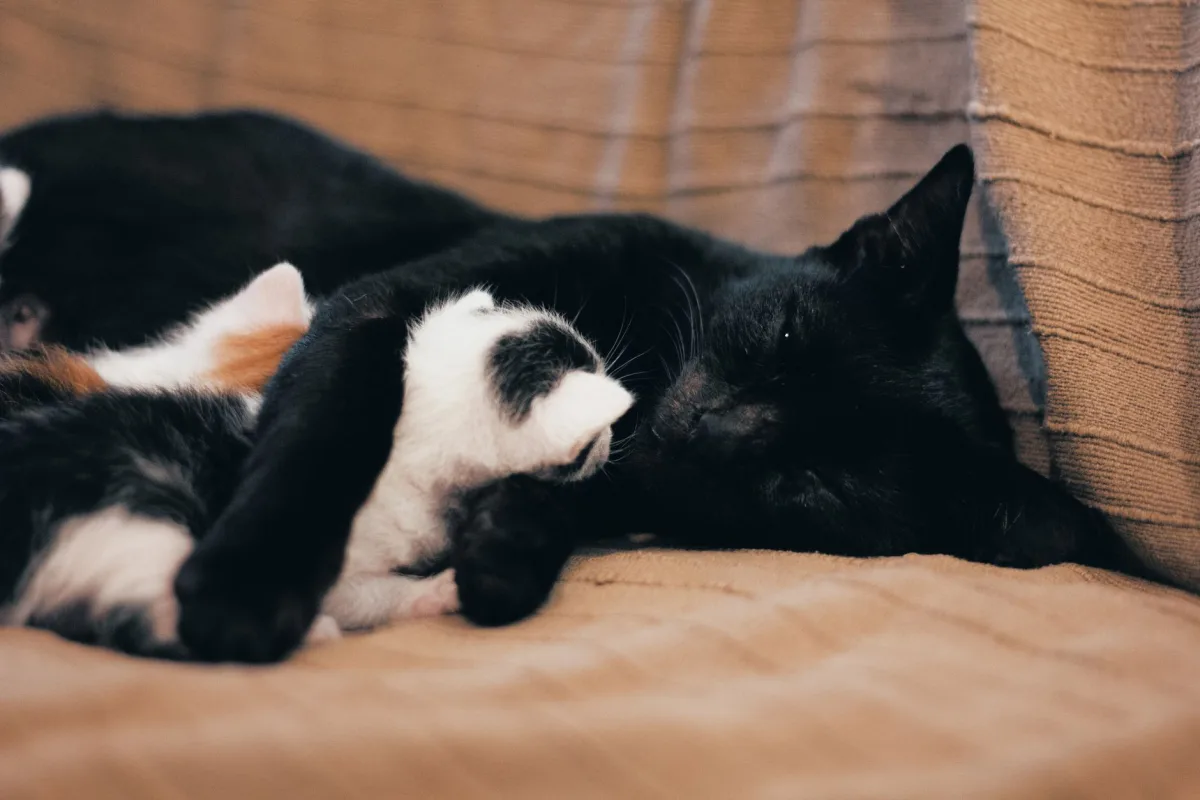
Toilet habit is one of the most visible gains of time spent with the mother — but not the only one. Kittens that stay with the mother for 8-12 weeks:
- Reinforces toilet behavior through imitation
- Learns biting and scratching limits by playing with siblings
- Social behaviors develop more healthily
- Becomes stronger in terms of immunity
- Sucking and mouthing behaviors due to early separation are less common
For the repercussions of leaving early outside the restroom kitten eats sand You can look at our article. International Cat Careemphasizes the decisive role of the time kittens spend with their mother and siblings in behavioral development.
Late kittens
Some pups fall behind schedule. This is often about conditions, not education:
| Reason | What to do |
|---|---|
| Early separation from mother | Patient routing, frequent container access |
| Can't get into the bowl | Low-sided container. See choosing the box |
| The cap is too far | Move to the room where the kitten is located |
| Diarrhea or parasites | Vet |
| Doesn't like the type of sand | Try different texture |
| The area is very large | Keep the cat in one room for a while |
| Stress | Quiet environment, routine |
Measure of patience: A healthy kitten with the right environment will see progress within a few days. If there is no progress in two weeks, it's not a matter of training — a health or environmental check is needed.
Those who facilitate the process
- Keep the container closeThe kitten has a small bladder and the urgency comes suddenly.
- Choose low edgeA container that requires climbing is the most common invisible obstacle.
- Redirect at key momentsAfter waking up, eating and playing.
- Keep cleanScooping twice a day; Kittens do not enter the dirty container.
- Use safe sandNon-clumping, perfume-free, dust-free.
- Clean accidents with enzymesThe remaining smell makes the behavior repeat.
- Do not punishFear is the only thing that prevents learning.
- Keep the routine steadyDo not change the container location and sand type frequently.
Regression after learning
A kitten that uses the bowl regularly suddenly starts leaking It is not the degradation of education.. Possible reasons:
- Health problem. Urinary tract, diarrhea, parasites. This is the first thing to check.
- The container has shrunk. The cub grows rapidly; The container becomes too small in a few months.
- The environment has changed. Moving, new person, furniture change.
- The container is dirty. As we grow, the amount of waste increases; The old cleaning frequency may not be enough.
- The sand has changed. Sudden change can lead to rejection.
In this table, the veterinarian is reviewed first, then the container and litter order; for detail The cat is confused about its toilet And toilet training mistakes See our articles.
As the kitten grows, make the transition to the bowl and litter separately, not together. It is a perfume-free and clumping product in the adult period. cat litter from olive pits, makes cleaning easier and urine tracking possible — making it quicker to figure out the cause if a regression occurs in the future.
Do not rush the last step of the calendar, the litter transition: once the mouthing behavior is completely finished, spread it out over 5-7 days. At this stage cat litter from olive pits Switching to a clumping product like this will be the beginning of health monitoring that will last throughout adulthood.
After 4-6 months
When the mouthing behavior is over Clumping olive pits into cat litter You can move on gradually.
single 8 L natural cat litter compact 7.5 L natural cat litter All cat litter types
Frequently asked questions
At what age does a cat learn to toilet?
Kittens begin to show interest in the litter box when they are 3-4 weeks old and use it regularly when they are 4-6 weeks old. By 8 weeks old, a kitten has mostly established the habit.
At what age should a kitten be separated from its mother?
At the earliest age of 8, preferably 12 weeks. This period is important for toilet habits, social behavior and immune development.
Why doesn't the kitten use the bowl?
The most common reasons are not being able to enter the container (the edge is high), the container being far away, health problems, disliked sand, and being left in a very large area.
Why does the learned kitten suddenly start leaking?
Usually due to health problem, shrinkage of the container, change of environment or dirty container. Get a vet check first.
What should I do if the kitten hasn't learned in two weeks?
It's not about education; Get a health check and review container height, location, sand type and area size.
Related articles
Tags for this post

The team that produces sand in our production facility in Ayvalık turns the most frequently asked questions in the field into a guide. Health-related sections are general information; It is not a substitute for a veterinary examination.