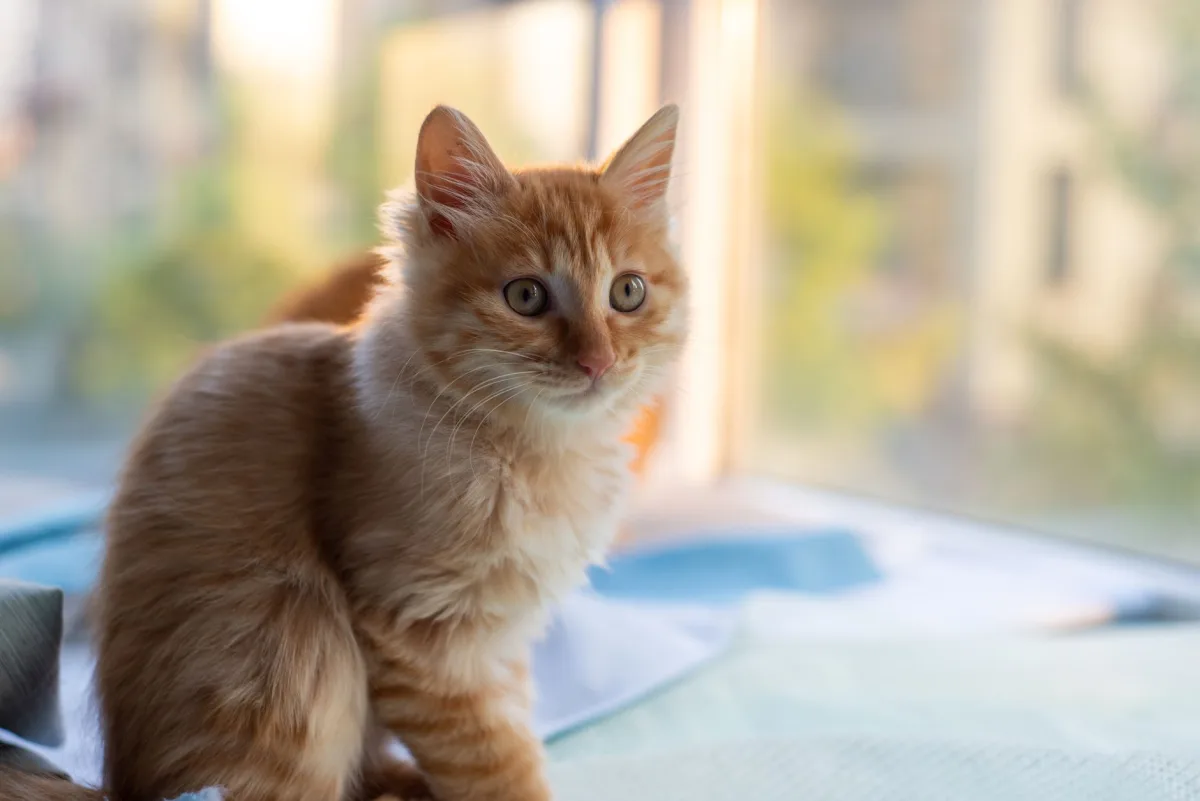
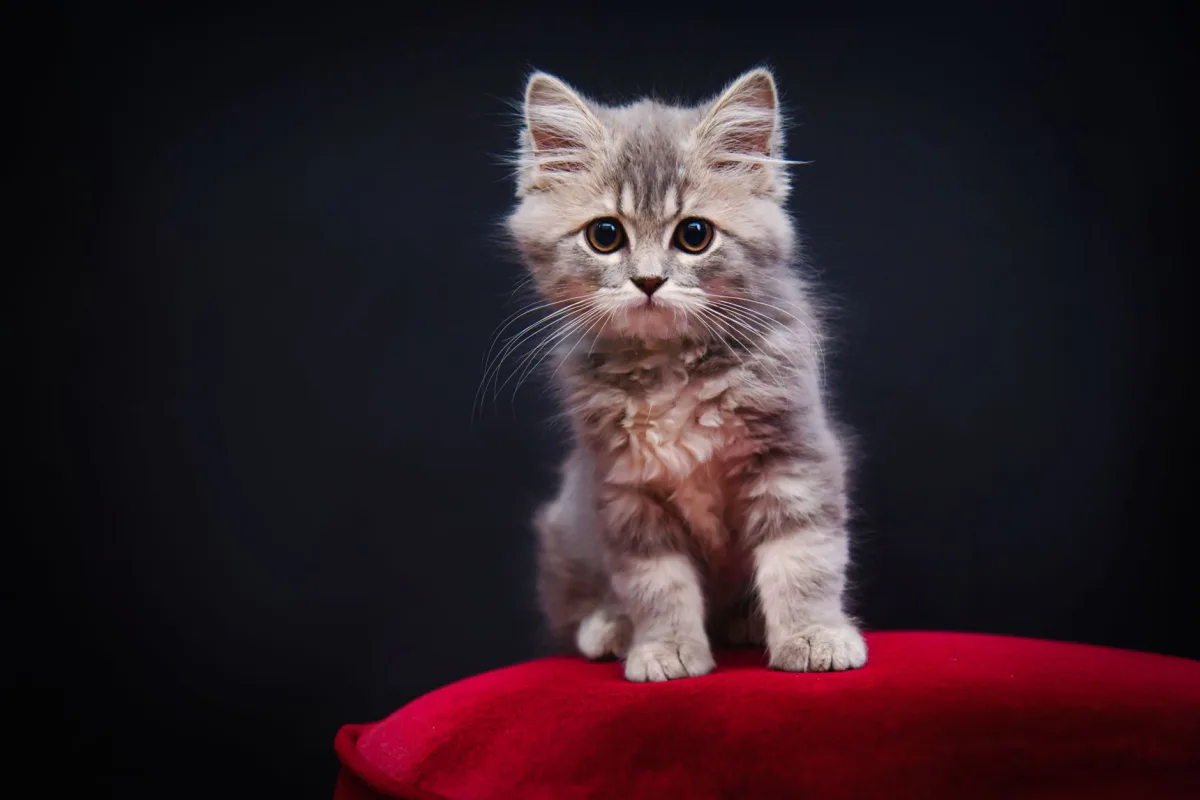
Contrary to popular belief, toilet training a kitten preparing the environment rather than teaching. Cats are born with the instinct to dig and bury; Your job is to put the right container in the right place and make the cat's job easier. The formula is simple: a small bowl with low sides, safe litter that does not clump, a quiet location away from the eating and sleeping area, redirecting the bowl after waking up and eating. Most kittens learn within a few days. Punishment is never used — fear is the only thing that prevents learning.
This is the most curious issue on the first day of a new kitten coming home. The good news: cats are much easier at this than dogs, and most kittens already bring what they learned from mom. This guide tells you how to complete the remaining part yourself.
Instinct: what don't we teach?
Cats are born with a tendency to bury their waste. This behavior comes from a reflex to hide the scent trail from predators and rivals. If the mother cat is near, the kitten reinforces this by watching; It usually starts to enter the container at the age of 3-4 weeks.
So what is taught is not "to go to the toilet", "where are you going to do this?"is. This distinction changes a lot in practice: if the cat resists, the problem is not that the cat does not understand, but that the environment is not suitable.
Preparation: container, sand, location
| Element | Best for the baby | Why |
|---|---|---|
| Cap edge | Low (5-8 cm) | The baby can't climb |
| Cap size | Small but not narrow | Trust and access |
| Lid | Avoid | Visibility and easy login |
| Litter type | Non-clumping (first months) | Risk of ingestion |
| Litter depth | 3-4cm | Enough to dig, it won't sink |
| Location | Calm, accessible | Trust |
| Distance | Away from food and bed | Natural distinction |
| Number | At least 2 | Accessibility even in small homes |
In the first weeks, do not keep the container wide, keep it close. The kitten has a small bladder and the sense of urgency comes suddenly. If the container is far away, it can't catch up — it's not a training failure, it's a distance issue. As the kitten grows, you can gradually move the container to the desired location.
For details of container selection litter box for kittenfor sand selection which litter for kittens See our articles.
Step by step tutorial
- Show the container on the first dayWhen you bring the kitten home, first put it in the container. Record its smell and location.
- Redirect at key momentsDrop it into the bowl after waking up, 10-20 minutes after eating, and after play.
- Read the signsBending, turning, digging motion while sniffing at the ground — immediately move to container.
- Imitate diggingGently dig in the sand with your finger; some pups start by watching this.
- Wait, don't interveneDo not stand in the container and watch; Take a few steps away.
- Reward successPraise in a calm voice, followed by a short caress. Do not give the food reward in the bowl.
- Keep the litter box cleanScoop twice a day; Kittens do not enter the dirty container.
- Clean up accidents silentlyUse an enzyme cleaner; Don't react.
Never do: Rubbing the kitten's nose, yelling at it, holding it by force, or punishing it. These don't teach — they create fear and the cat will begin to avoid both the captain and you. Some toilet problems arise directly from these "training" methods.
How long does it take?
A healthy kitten that has been with its mother long enough will usually start using the container regularly within a few days. Variables affecting duration:
- Learning from mother. Kittens that stay with the mother for up to 8 weeks usually arrive ready.
- Age. In very young kittens, muscle control may not yet be developed.
- Past. Kittens born on the street are accustomed to soil or sand-like surfaces; The transition is easy. See stray cat training.
- Health. Diarrhea, parasites or pain prolong the process.
- Environment. A crowded, noisy or very large area will strain the pup.
For expectations by age At what month does a cat learn to toilet? See our article.
If there is a problem
- Get your health checkedDiarrhea, parasites and urinary tract problems look like training failures.
- Lower the containerThe kitten may not be able to climb over the edge.
- Bring the container closerMove it to the room where the kitten is located.
- Add more litter boxesOne on each floor in a multi-storey house.
- Replace the sandSome pups don't like certain textures.
- Clear accidents completelyThe lingering smell makes the behavior repeat.
- Temporarily shrink the areaKeep the kitten in one room and place the bowl in a visible place.
- Be patientPrinting prolongs the process.
For all common mistakes 8 common mistakes in toilet trainingfor illegal urination The cat is confused about its toilet See our articles.
Accidents: why do they happen, how to clean up?
It is normal to have accidents during the training process and is not an indication of failure in itself. Two things matter: win the reason read correctly and trace completely to delete.
| Accident scene | Most likely cause | Correction |
|---|---|---|
| Right next to the container | Cannot enter the container or the container is dirty | Lower the edge, scoop often |
| Outside the room where the container is located | The door is far away, can't reach it | Add second bowl |
| Carpets and rugs | Soft ground preference | Review sand texture |
| Bed and laundry | Search for safe scents, stress | Calm things down, close access |
| Scattered everywhere | There may be a health problem | Veterinary check |
The cleaning part is the most skipped step. in urine uric acid crystals are insoluble in water; A spot cleaned with ordinary detergent is still a toilet for the cat's nose and the behavior is repeated. That's why accidents happen with enzyme cleaner should be deleted.
Do not use ammonia cleaner. The smell of ammonia is similar to the urine mark and may lead the pup to the same spot. Bleach is also not suitable; It carries the risk of contact with ammonia and its pungent smell confuses the kitten rather than removing it from the area.
Do not react to the kitten as soon as you see the accident. Baby, your reaction is not about what he does. with you and that room relates; The result is hiding behavior. Clean quietly and look for the cause according to the table above. For detailed cleaning method the house smells like a cat You can look at our article.
Things to avoid
What works
- Low-rimmed container without lid
- Guidance at critical moments
- Clean container
- Quiet and accessible location
- Enzyme cleaning
- Patience and positive reinforcement
Those that don't work
- Punishment and shouting
- Don't rub your nose
- Do not hold the container by force
- Scented litter
- Changing the location of the container frequently
- Closing the container in the bathroom
It is especially important to stay away from perfumed litters during the kitten period: smell sensitivity is high and a negative first experience delays the establishment of the habit. International Cat Care, draws attention to the role of positive experiences in the juvenile period in creating permanent behavior.
First week: daily plan
The first seven days of a new kitten are the period in which the habit is established. The following plan provides a simple framework that works in most homes:
| Day | Focus | To be done |
|---|---|---|
| 1 | Introduction | Place the kitten in the container as soon as you bring it home; start in one room |
| 2 | Orientation | Move to bowl after waking up and eating |
| 3 | Observation | Learn the signs: sniffing, turning, digging motion |
| 4 | Routine | Fix cleaning hours; scoop twice a day |
| 5 | Second pot | Add a container to the second spot where the kitten spends time |
| 6 | Area expansion | Open another room; make sure you can see the container |
| 7 | Review | Are the number of accidents decreasing? If it doesn't decrease, check the container and sand. |
Accident count measure: A few accidents are normal in the first days and are expected to gradually decrease. If there is no decrease by the end of the seventh day, it is not a matter of training: check the bowl height, the distance of the bowl, the type of litter and the health of the kitten in order. The most common reason is that the kitten cannot climb into the container.
If there is another cat in the house
The new kitten changes the order in the house. Do not expect the existing cat to share its bowl with the kitten:
- Give separate container. Keep the kitten's low bowl in a separate spot from the adult's bowl.
- The rule is the same: number of cats + 1. Three cats in a two-cat household.
- Distribute the containers. Containers standing side by side are considered the only resource for cats.
- Do not touch the adult's bowl. Changing its pattern can create regression.
- Make the introduction slowly. Litter problems can be the first sign of social tension.
For detail How many cats and how many litter boxes? And multi-cat homes See our articles.
Transition as you grow up
As the offspring grows, two transitions occur:
- Cap passage. At about 4-6 months of age, the adult size container is started; The length rule of 1.5 times the cat's height comes into play. See choosing the box.
- Sand crossing. When the mouthing behavior is over, clumping sand can be used. This makes cleaning easier and makes urine tracking possible.
Spread both passes over several days; for method switching brands See our article. It is a perfume-free and dust-free product when transitioning to adulthood. cat litter from olive pitsIt is a suitable option in terms of both clumping and natural content.
After the training is completed, not breaking the routine you have established prevents problems from coming back: same pot, same place, same sand. What will you choose as you transition into adulthood? cat litter from olive pits A perfume-free product such as this provides a stable base that can be used for years without changing.
Transitioning to adulthood
When mouthing behavior is left behind 100% natural olive pit cat litter You can move on gradually.
8 L olive pit cat litter 7.5 L olive pit cat litter See all cat litters
Frequently asked questions
How to toilet train a kitten?
Place a low-sided bowl in a quiet, accessible location, use safe litter, and guide the kitten to the bowl after waking, eating, and playing. Keep the container clean and never use fines.
How long does it take for a kitten to learn the toilet?
A healthy kitten that has been with its mother long enough will usually start using the crate regularly within a few days. Age, health and environment affect this period.
What should I do if the kitten is crawling out of the bowl?
Get a health check first, then lower the bowl and move it closer to the pup, increase the number of bowls and thoroughly clean accidents with an enzyme cleaner. Don't use punishment.
Should I punish the kitten?
No. Rubbing your nose, yelling, or manhandling does not teach; It creates fear and causes the cat to avoid both the container and you.
Which litter should be used for kittens?
Due to the risk of being put in the mouth in the first months, sand that does not clump is preferred. Once the mouthing behavior is over, clumping sand can be used.
How many litter boxes are needed?
At least two containers are recommended even for a single litter; In multi-storey houses, there should be one on each floor. In adulthood, the rule becomes number of cats + 1.
Related articles
Tags for this post

The team that produces sand in our production facility in Ayvalık turns the most frequently asked questions in the field into a guide. Health-related sections are general information; It is not a substitute for a veterinary examination.