When choosing sustainable cat litter, we look at the entire life cycle of the product, not just a single label. The environmental impact of a cat litter is not measured by a single feature; raw materials, production, transportation, lifespan and waste It is the sum of five stages: The most problematic group on this scale mined bentoniteIt is: non-renewable, heavy (high payload), non-biodegradable and goes to waste. The most advantageous group is from agricultural by-product produced vegetal sands — cat litter from olive pits Products such as these do not create additional raw material demand because they utilize waste that has already emerged. But the “natural” label alone does not imply sustainability; lightness, efficiency and packaging must also be taken into account.
Cat litter is one of the few products we consume regularly at home and all of which goes to waste. Tens of kilos per cat per year. This scale makes product selection a true environmental decision. This guide goes beyond marketing claims and looks at all five stages.
Five-stage evaluation
It is misleading to evaluate the environmental impact of a product under a single heading. For example, a biodegradable sand loses some of its advantage if agricultural land and water are consumed in its production. Conversely, if a heavy sand is low yield, the payload is multiplied. The correct question is: What is the total effect of one year's use on one cat?
1. Raw material
| Litter type | Raw materials | Renewability |
|---|---|---|
| Bentonite | Clay mine | Non-renewable |
| Crystal (silica) | Silica sand | Non-renewable |
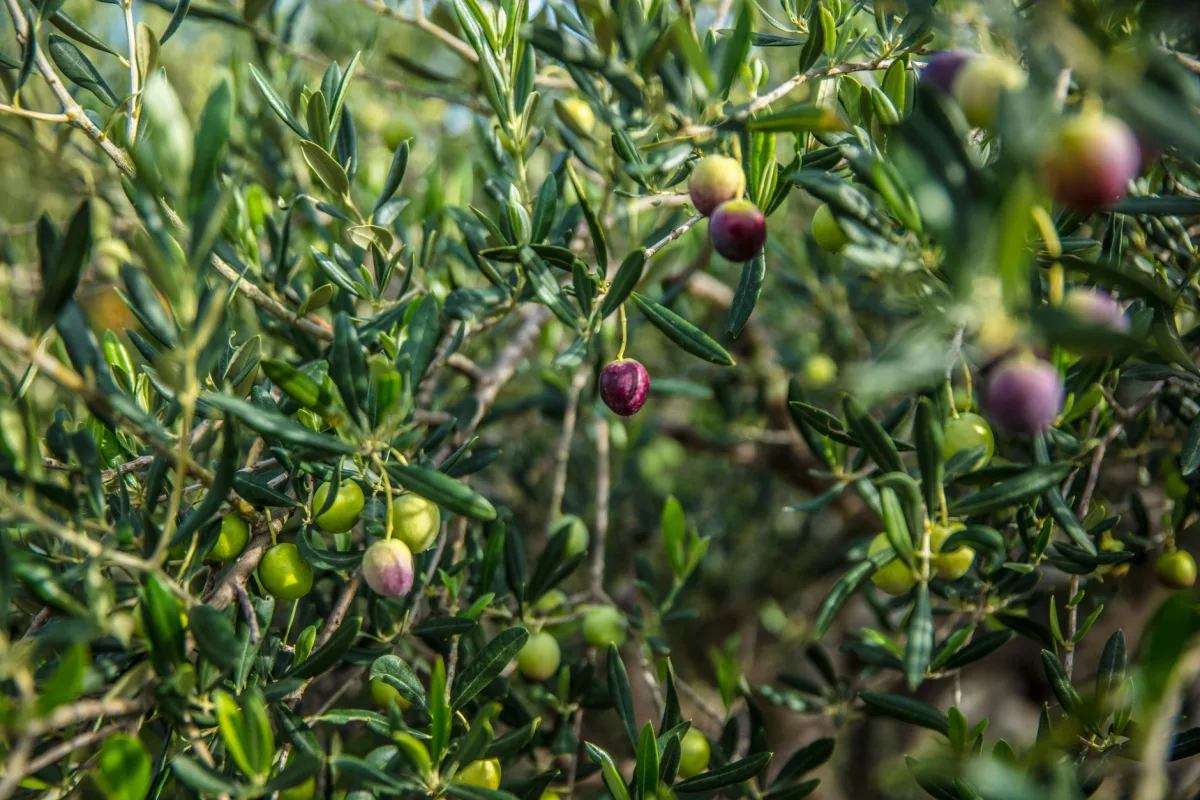
| Olive pit | Olive oil production by-product | Renewable, waste recycling |
| Pine pellets | Forest product by-product | Renewable |
| Paper | Recycled paper | Renewable, recovery |
| Corn and wheat | Agricultural product | Renewable but in competition with food |
| Tofu | Soy byproduct | Renewable |
Critical distinction — spinoff or main product? For corn and wheat sands, the product comes directly from agricultural production; This means using a resource and agricultural land that can be used for food purposes. Olive pits and pine pellets are an already formed byproduct evaluates. This difference creates an important sustainability divide even among vegetal sands.
For detailed effect of bentonite mining environmental cost of bentonite miningfor the evaluation of olive waste recycling of olive waste See our articles.
2. Production
The determining factor in the production phase is energy consumption. After the clay sands are removed, they are dried and ground; Vegetable sands, on the other hand, go through drying, grinding and, in some products, carbonization processes. Both groups use energy — the difference is whether the input source is renewable or not.
- Drying. Required in almost all types of sand; It is an energy intensive phase.
- Grinding and sifting. It determines the grain size; Dust control is done here.
- Carbonization. An additional step in products with activated carbon. See How does activated carbon work?.
- Adding contribution. Perfumes and chemical additives are an additional burden for both the environment and health.
3. Transport
This is the most overlooked topic in sustainability discussions. cat litter heavy and bulky is a product; transport emissions are directly proportional to weight.
| Factor | Effect |
|---|---|
| Product weight | Same volume of heavy sand means more fuel |
| Production distance | Domestic production has an advantage over imported products |
| Package size | Bulk package reduces packaging and shipping per unit |
| Yield | Less consumed sand means fewer shipments per year |
Bentonite is noticeably heavier than vegetal sands; This means higher payload for the same volume. For weight comparison cat litter weight You can look at our article.
Share of domestic production: Türkiye is one of the world's leading olive producers, and olive stone is a by-product that occurs in large quantities within the country every year. Processing this raw material on-site eliminates the burden of transporting imported products — a tangible advantage in terms of sustainability.
4. Lifespan and efficiency
How long a sand lasts is the most practical item of environmental calculation: less consumed sand means less production, less transportation and less waste. Three features that determine efficiency:
- AbsorbencySand, which absorbs liquid quickly and heavily, becomes saturated later. See absorbency.
- Clump integrityThe dispersed lump carries away the clean sand as you row; consumption increases. See clumping.
- Odor controlSand that smells prematurely causes unnecessary premature complete replacement.
When these three work well together, the full replacement interval is extended and annual consumption drops significantly. For calculation method How much is 8 liters enough? And frequency of change See our articles.
5. Waste and disposal
All cat litter eventually turns into waste. There are two questions here: Is it biodegradable? And How is it disposed of??
- Bentonite and silica non-biodegradable; It accumulates permanently in the landfill.
- Vegetal sands It is biodegradable, but this advantage only occurs under suitable conditions.
- Used sand — due to its content — it should not be used in compost for food plants.
- Pouring into toilet It is not suitable for installation and purification.
Let's be realistic: When biodegradable sand goes to a landfill in a sealed bag, it cannot use a significant part of its biodegradability advantage because it waits in an oxygen-free environment. So the "biodegradable" label only makes sense when combined with the appropriate disposal method. Detail: biodegradable cat litter And How to dispose of cat litter.
Sand types comparison
| Litter type | Source | Weight | Biodegradable | Overall rating |
|---|---|---|---|---|
| Olive pit | Agricultural byproduct | Light | Yes | High |
| Pine pellets | Forest byproduct | Light | Yes | High |
| Paper | Recycle | Very light | Yes | High but poor odor control |
| Tofu | Soy byproduct | Light | Yes | Medium-high |
| Corn and wheat | Agricultural product | Light | Yes | Medium (competition with food) |
| Crystal (silica) | Coal | Light | No | Low |
| Bentonite | Coal | Heavy | No | Low |
Common misconceptions
True
- Production from by-product is a real advantage
- Light weight reduces payload
- Efficient sand produces less waste
- Domestic production shortens distance
- Additive-free content is in favor of both health and the environment
Error
- The "natural" label alone means sustainability
- Biodegradable sand is thought to be soluble in all conditions
- Using used sand in the vegetable garden
- Thinking it's environmentally friendly to flush it down the toilet
- Not taking into account the packaging
For packaging size packaging and recycling, for carbon accounting carbon footprint See our articles.
How do you verify claims?
The terms "natural", "eco-friendly", "biodegradable" and "sustainable" are frequently used on cat litter packaging. most of these not based on a binding standard. Concrete questions you can ask as a consumer:
- What is the raw material?"Herbal" is not enough; Which plant, from which source? By-product or direct agricultural production?
- Is the ingredient list complete?A herbal product may have been mixed with bentonite; In this case, the biodegradability claim becomes invalid.
- Where is it produced?It gives an idea about the production location and transportation distance.
- Is there any contribution?Perfumes, colorants and deodorizing chemicals are an unnecessary burden for both health and the environment.
- What is the packaging?Single-layer or multi-layer lamination?
- Are volume and weight both written?If it is not written, you cannot compare efficiency.
How to understand greenwashing? If the packaging has a green color, a leaf image, and the phrase "eco-friendly" but there is no ingredient list, the raw material is unclear, and weight information is missing — most likely the claim is in the design rather than the product. Producers who give concrete information are generally those who have the knowledge to give.
Practical advice
- Choose sand produced from byproductsOlive pits and pine pellets are in this group.
- Choose local productionTransport distance is direct emission.
- Measure efficiencyLook at how many days it lasts, not the price per liter.
- Get bulk packageThe burden per package and shipment is reduced — but only if you can store it properly. See bulk purchase.
- Scoop, dilute full changeRegular scooping reduces annual consumption significantly.
- Use fragrance-free productsIt eliminates unnecessary chemical load.
- Recycle the packagingPay attention to material separation.
- Store sand correctlySand spoiled by moisture is a wasted resource. See how to store.
International olive sector organizations consider the evaluation of by-products of olive oil production as one of the priority issues of the sector; for detail International Olive Council You can look at the sources. The European Food Safety Authority provides the safety framework for the use of agricultural by-products. EFSA Publishes via.
Finally, it is worth noting that sustainability should not come before your cat's needs. A litter that your cat does not use, no matter how environmentally friendly it is, causes urination outside the container and a much greater cleaning burden in the house. Fortunately, the two goals often do not conflict — cat litter from olive pits Products such as these are both low-impact and have a high acceptance rate.
From waste to product
Olive pit cat litterIt utilizes the by-product of olive oil production: it does not create demand for new raw materials, is lightweight and biodegradable.
single 8 L natural cat litter 8 L x 4 advantageous cat litter pack All cat litter types
Frequently asked questions
Which is the most environmentally friendly cat litter?
Lightweight and biodegradable sands produced from agricultural or forest by-products. Olive pits and pine pellets stand out in this group; Paper sands are also advantageous in that they are recycled.
Is bentonite cat litter harmful to the environment?
It is extracted from a non-renewable mineral resource, is heavy (high payload) and does not biodegrade. These three characteristics place it in the most environmentally disadvantaged group.
Does biodegradable cat litter dissolve in all conditions?
No. Sand that goes to a regular landfill in a sealed bag cannot use a significant part of its biodegradability advantage because it waits in an oxygen-free environment.
Can used cat litter be composted?
It should not be used for food plants. Used sand poses a health risk due to its content; You need to be careful about this.
What is the environmental impact of sand weight?
Transport emissions are directly proportional to weight. Heavy sands consume more fuel for the same volume; Therefore, lightness is a real advantage in terms of sustainability.
Is all sand bearing the natural label sustainable?
No. If the raw material competes with food production, the product is transported from a distance, or the yield is low, being "natural" alone is not enough.
Related articles
Tags for this post

The team that produces sand in our production facility in Ayvalık turns the most frequently asked questions in the field into a guide. Health-related sections are general information; It is not a substitute for a veterinary examination.