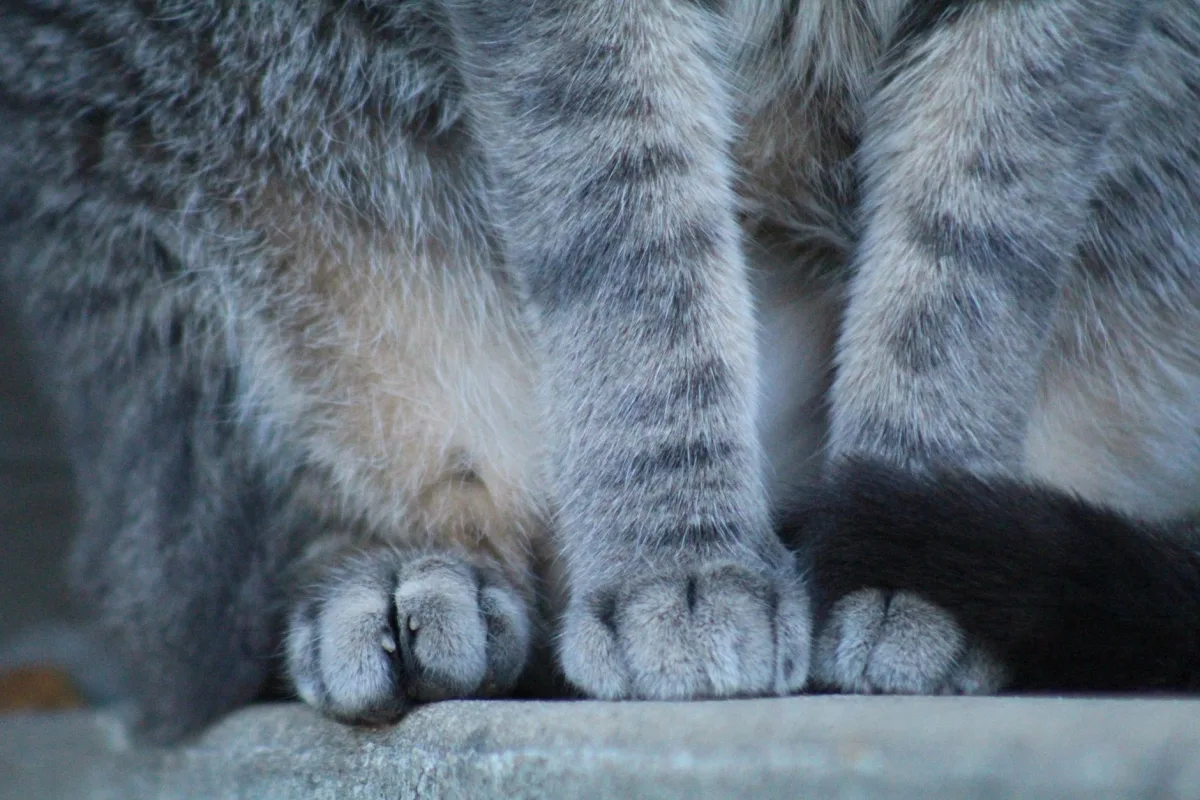
Cat paws are sensitive: the litter box is the surface that the paw contacts most during the day. Sands with sharp corners, very hard or extremely coarse grained may cause irritation to the paw pads; Fine dust accumulates between the nails. Symptoms include excessive licking of the paw, exaggerated shaking when getting out of the container, reluctant entry into the container, and redness. Solution, A dust-free fabric with rounded lines and medium grain size to go past; If irritation persists, it's time to get a veterinarian evaluation — because paw problems aren't always caused by litter.
Notes: If there is redness, swelling, discharge or lameness in the paw, do not dismiss it as a sand problem; allergies, infections, and other skin problems may look similar. Consult a veterinarian.
How does sand damage paws?
The cat doesn't just stay in the litter box: it digs, pushes, covers. During these movements, the paw pads and between the nails constantly rub against grains of sand.
- Sharp corners. Broken, angular grains can scratch the surface under pressure.
- Extreme hardness. Very hard beads put pressure on the soft paw pad.
- Big one. Large grains create an unstable ground under the paw; The cat gets disturbed.
- Fine powder. It accumulates between the nails, is removed by licking, and can cause dryness.
- Moist residue. In a dirty bowl, the paw remains constantly moist; This facilitates irritation.
- Chemical additives. Perfume and deodorizing additives may cause reactions on sensitive skin.
Symptoms
| Symptom | What it may indicate |
|---|---|
| Exaggerated shaking when the captain comes out | Sand disturbs paws |
| Licking the paw for a long time | Irritation or residue |
| Enter reluctantly | The floor is disturbing |
| Urinating by pressing on the edge of the container | Doesn't want to step on sand |
| Redness on paw pad | Veterinary evaluation |
| Debris between nails | Dust or damp residue |
| Limp | Vet — may be caused by something other than sand |
Simple observation: How did your cat normally behave after being in the bowl, and how does he behave now? The change itself is more meaningful than individual symptoms.
Grain structure and hardness
| Litter type | Grain structure | Paw comfort |
|---|---|---|
| Olive pit | Medium size, rounded | Good |
| Fine bentonite | Very thin | Good but dusty |
| Coarse bentonite | May be large, angular | Middle |
| Crystal (silica) | Hard, angular fractures | Weak |
| Pine pellets | Big roller | Medium (requires getting used to) |
| Tofu pellets | Big but soft | Medium-good |
| Paper pellet | Soft | Good |
| Corn granule | Medium size | Good |
Crystalline silica sands attract particular attention in this table: their hard and angular fractures are the group most frequently complained about by sensitive paws. For the general effect of grain size grain size See our article.
Cat litter from olive pitsWith its processed and rounded medium-sized grain, it is a balanced option in terms of paw comfort; Being hard makes the grain durable, but it is not angular. It also does not contain perfume or chemical additives.
Sensitive groups
- Kittens. Paw skin is thinner. See which litter for kittens.
- Senior cats. Skin elasticity decreases, joint pain increases pressure. See senior cats.
- Cats after surgery. Risk of sand adhering to the seam area. See postoperative.
- Allergic cats. Skin sensitivity is high. See hypoallergenic litter.
- Cats with their nails trimmed. Paw sensitivity may be permanent in cats where this procedure is performed.
- Long-haired breeds. The feathers between the paws retain sand and moisture; It helps to shorten regularly.
What to do?
- Veterinary checkIf there is redness, swelling, discharge or limping, this first.
- Review sand typeSwitch from sand with sharp and hard grains to sand with rounded, medium-sized grains.
- Make the transition slowlyMix it over a few days. See switching brands.
- Keep the litter box cleanMoist residue increases irritation; scoop twice a day.
- Shorten the hair between the pawsReduces residue accumulation in long-haired cats.
- Use a litter matThe captain takes the remains at the exit. See litter mat.
- Stay away from perfumed productsIncluding sand, spray and granules.
- Watch the changeDoes licking and shaking behavior decrease within a week?
International Cat Carestates that the grain structure is decisive in cats' litter preference and that an uncomfortable ground may lead to rejection of the container. Therefore, paw comfort is not only a matter of convenience, but also a condition for the continued use of the container — see fig. won't use the litter box.
The determining factor in paw comfort is not hardness, It is a corner structure: a hard but rounded bead is more comfortable than a soft but angular one. Cat litter from olive pits It is exactly in this group — it does not crumble because it is durable, and it does not strain the paw because it is rounded.
Rounded, unperfumed grain
Olive pit cat litter It is a balanced option in terms of paw comfort with its medium size and rounded grain.
8 L olive pit cat litter 7.5 L olive pit cat litter See all cat litters
Frequently asked questions
Does cat litter cause paw irritation?
Sand with sharp corners, very hard or extremely coarse grains can cause irritation on sensitive paws. Perfumes and chemical additives can also cause reactions on sensitive skin.
My cat licks its paw a lot when it comes out of the bowl, is it normal?
A brief cleaning is normal; Prolonged and persistent licking may indicate that the sand is causing discomfort or irritation. If there is a rash, contact the veterinarian.
Which litter is suitable for cats with sensitive paws?
Sands with round lines, medium-sized grains, dust-free and perfume-free. Paper-based pellet litters are also well tolerated due to their softness.
Does crystal sand harm paws?
Crystalline silica sands can form hard and angular fractures; It is the most frequently complained group in cats with sensitive paws.
Should I cut the hair between the paws?
In long-haired cats, regular trimming of the hair between the paws reduces sand and moisture accumulation. Be careful when cutting or have it done at a veterinary clinic.
Related articles
Tags for this post

The team that produces sand in our production facility in Ayvalık turns the most frequently asked questions in the field into a guide. Health-related sections are general information; It is not a substitute for a veterinary examination.