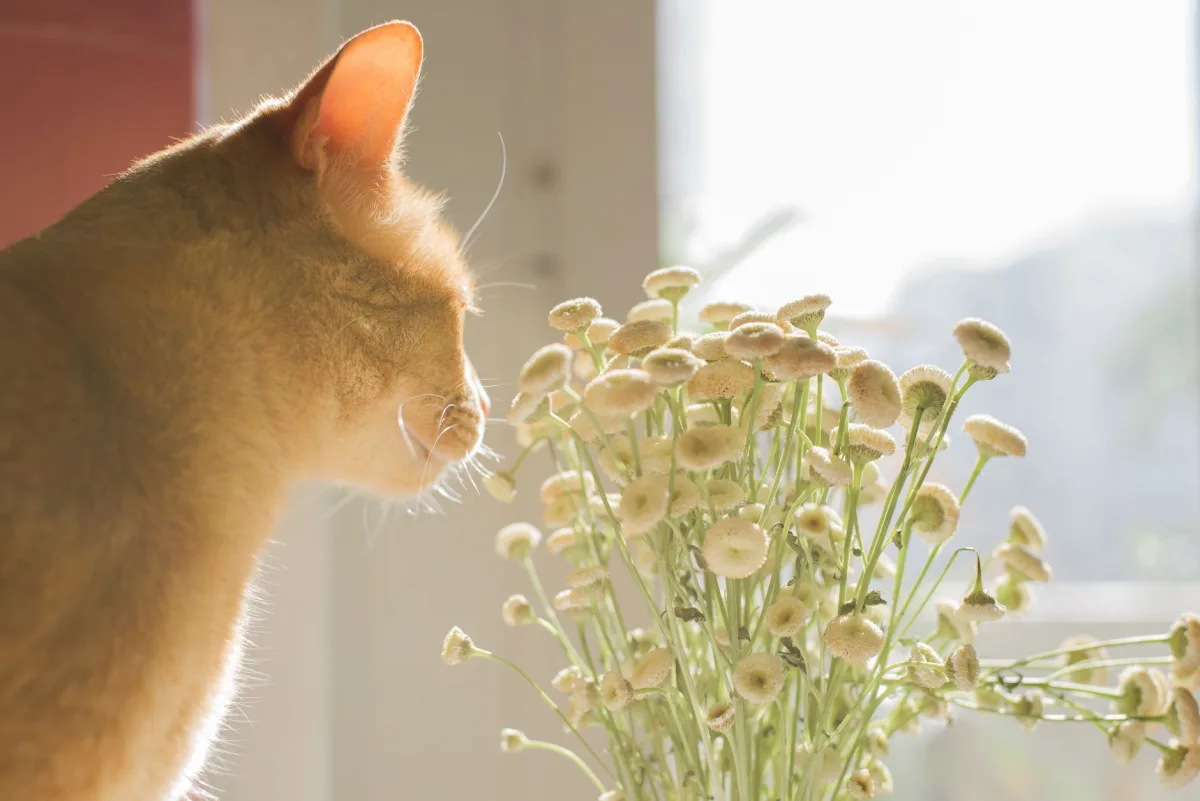
The decisive factor in the question of scented or unscented cat litter is your cat's nose, not yours. for cats unscented cat litter It's almost always better. Cats' sense of smell is many times more sensitive than humans; A lavender or powder scent that seems "fresh" to us may be a reason for the cat to reject the litter box. Perfume also smells does not resolve, adds a layer on top of it. The right solution is not to mask the smell is catching at the source — This is achieved by retention mechanisms such as activated carbon and regular cleaning.
There are cat litters on the shelves such as "lavender scented", "baby powder scented" and "ocean fresh". Do these really work, or are they designed for humans? In this article, we discuss the effect of perfume on cat behavior and alternatives.
How sensitive is cats' sense of smell?
The number of scent receptors in cats' noses is many times higher than that of humans. Also in cats vomeronasal organ (Jacobson organ) is found; This is a special structure in the roof of the mouth that detects chemical signals such as pheromones.
This means cats read the world largely through scent. The toilet area is a particularly sensitive area for them: the cat is defenseless there, and the “right” smell of the environment is directly linked to the feeling of security.
Why does perfume cause problems?
- Density differenceA scent that may seem mild to you may be overwhelming to the cat. A cat that digs its nose into the litter box picks up that scent at maximum intensity.
- Loss of familiarityCats recognize the toilet area by their own scent. Intense perfume disrupts this familiarity and the area becomes "stranger".
- Respiratory irritationSynthetic fragrance ingredients may cause irritation in sensitive cats and allergic household members. See cat litter and allergies.
- Illusory trustCleaning may be delayed as the perfume covers the odor. However, smell is the best indicator when it is time to clean.
The most common result: The cat stops using the litter box and starts urinating on the carpet, bed, or corners. This behavior is not "stubbornness", but the result of the environment becoming unacceptable. See The cat is confused about its toilet, won't use the litter box.
International Cat Careemphasizes that odor and texture changes in the toilet environment may cause cats to reject the bowl.
To cover or to keep?
Retention (activated carbon)
- Binds ammonia molecules on its surface
- Does not add new odor to the environment
- Neutral for cat
- Suitable for allergic individuals
- Its effect lasts for the life of the sand
Covering (perfume)
- Does not touch the source of odor
- Two scents overlap each other
- Can deter the cat
- The effect is short-term
- Can postpone cleaning
For the working mechanism of activated carbon: What is activated carbon? And How does it trap the smell?.
If your cat is uncomfortable with perfume
Watch out for these signs:
- It goes up to the edge of the container and comes out without going in.
- He comes in but leaves immediately without covering up
- Peeing right next to the bowl
- Hesitates or sniffs when approaching the person
- After the litter change, urination outside the toilet started
If these symptoms are observed, gradually switch to a perfume-free litter and observe for 2-4 weeks. Transition plan: 7-day transition.
How to install odorless solution?
- Choose unscented sand. The ingredient list should not contain the words "perfume", "fragrance" or "fragrance".
- Choose a product with activated carbon. It retains the odor rather than masking it.
- Scoop at least once a day. No sand can replace cleaning.
- Wash the container as well. Plastic retains odor over time. See litter box disinfection.
- Ventilate. Closed corners trap odor. See placement guide.
- Do not add spray or powder. See Are deodorizers safe?, pour baking soda.
- Add more litter boxes. N+1 rule. See How many containers do you need?.
Perfume-free, with activated carbon
Cat litter from olive pits It doesn't cover up the odor — it keeps it at the source.
8 L olive pit cat litter Four-pack of cat litter for multi-cat homes See all cat litters
Frequently asked questions
Is scented cat litter harmful?
Although it is not directly toxic, it can be irritating to cats due to their sensitive sense of smell and may cause them to reject the litter box. Synthetic fragrance ingredients may also cause respiratory irritation.
Do cats like scented cat litter?
Usually no. Cats' sense of smell is many times more sensitive than humans; Perfume is a deterrent for most cats and disrupts the familiarity of the toilet area.
Does unscented cat litter cause odor?
Being unscented doesn't mean no odor control. Odorless sands with activated carbon physically retain ammonia; This is more effective than covering it with perfume.
Can I add perfume or air freshener to cat litter?
Not recommended. Added scents may deter the cat, and some essential oils are toxic to cats. The right way to reduce odor is regular cleaning and a retaining litter.
What should I do if my cat does not use the bowl after the litter change?
Go back to the previous mixing ratio, try a fragrance-free product, check the cleanliness and position of the container and give it a choice by placing a second container.
Related articles
Tags for this post

The team that produces sand in our production facility in Ayvalık turns the most frequently asked questions in the field into a guide. Health-related sections are general information; It is not a substitute for a veterinary examination.